Ombuds-ICMS functions
One of the most intriguing leadership paradoxes I’ve observed over the years is this:
Organizations create Ombuds-aligned Informal Conflict Management Systems to gain independent insight into systemic issues, workplace dynamics and emerging organizational risk.
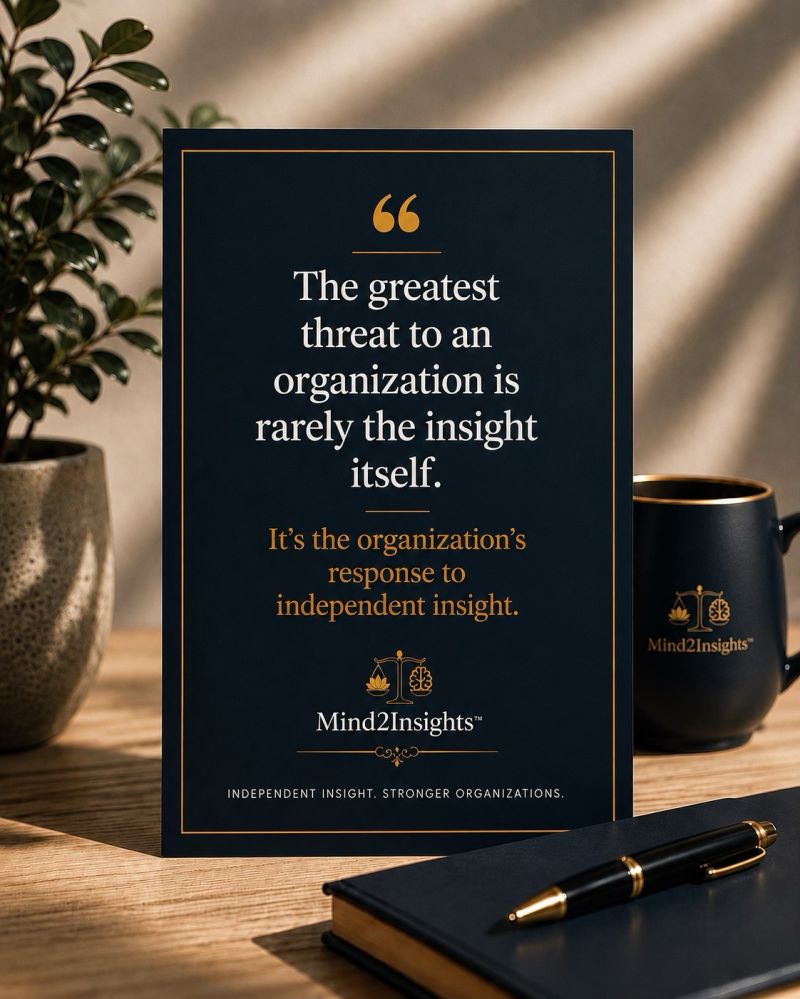
The greatest threat to an organization is rarely the insight itself. It’s the organization’s response to independent insight.
Yet as those insights deepen, they can surface uncomfortable tensions—prompting leaders and organizations to explain, defend, soften, or even overlook what is being revealed, rather than fully explore the underlying conditions and what they may be telling us about the system itself.
An Ombuds-ICMS function doesn’t exist to assign blame.
It exists to identify patterns before they become grievances, investigations, litigation, or psychological harm.
Its greatest contribution isn’t resolving individual conflicts—it’s helping organizations see what they may not yet recognize.
True independence is more than a governance structure.
It’s the discipline to preserve neutrality, protect confidentiality, and speak honestly about systemic patterns—even when those insights are uncomfortable.
The real question isn’t whether organizations value independent insight.
It’s whether they are prepared to learn from it.